
Find Who Owns a Cache County Property
The assessor record comes first. It ties an owner name to a tax parcel. That is the fastest way to answer a basic ownership question. The deed records at the County Recorder also matter. They tell you who actually received title in the latest transfer. CORE is the county's property search tool. It lets you search by address, owner or business name, parcel, tax year, or legal description. The GIS viewer works too. It locates an address or tax ID and displays the parcel's owner, mailing address, property address, and legal description.
Know the limits. Cache County describes CORE as representational rather than authoritative. A sale may be too new to show. A business name may stand in for a person. A trust or estate may hold the recorded interest. When the legal status matters, read the filed instrument itself. Get title advice instead of trusting one parcel result.
- Search CORE or GIS by the property's street address and note its parcel tax ID.
- Read the owner and mailing-address fields, checking that the situs address matches.
- Search the Recorder by the owner name, parcel, or legal description for the latest transfer.
- Compare the deed's parties and description with the parcel record; ask the custodian if they conflict.
The Cache County current-owner record explains how to read the assessor's present owner field.
Cache County Owner Fields in CORE
CORE's owner search centers on the Last Name or Business Name field. First Name can narrow things further. You can also search by street address, parcel, tax year, city, or legal description. Filling in several fields at once tightens the results. Name fields marked for partial matching make fuzzy lookups easier. A business or trust name goes in as written. One warning applies. A name match alone can return multiple parcels, or several people with similar names.
When you start from an address, compare two fields on the parcel. The Property Address is the situs, the land itself. The Owner Address is where the tax bill gets mailed. The county's GIS sample shows they can differ even on a downtown Logan parcel. CORE's tax ID gives the firmest link for a search result. It connects straight to the Recorder's land record. The Cache County CORE search shows these fields directly.
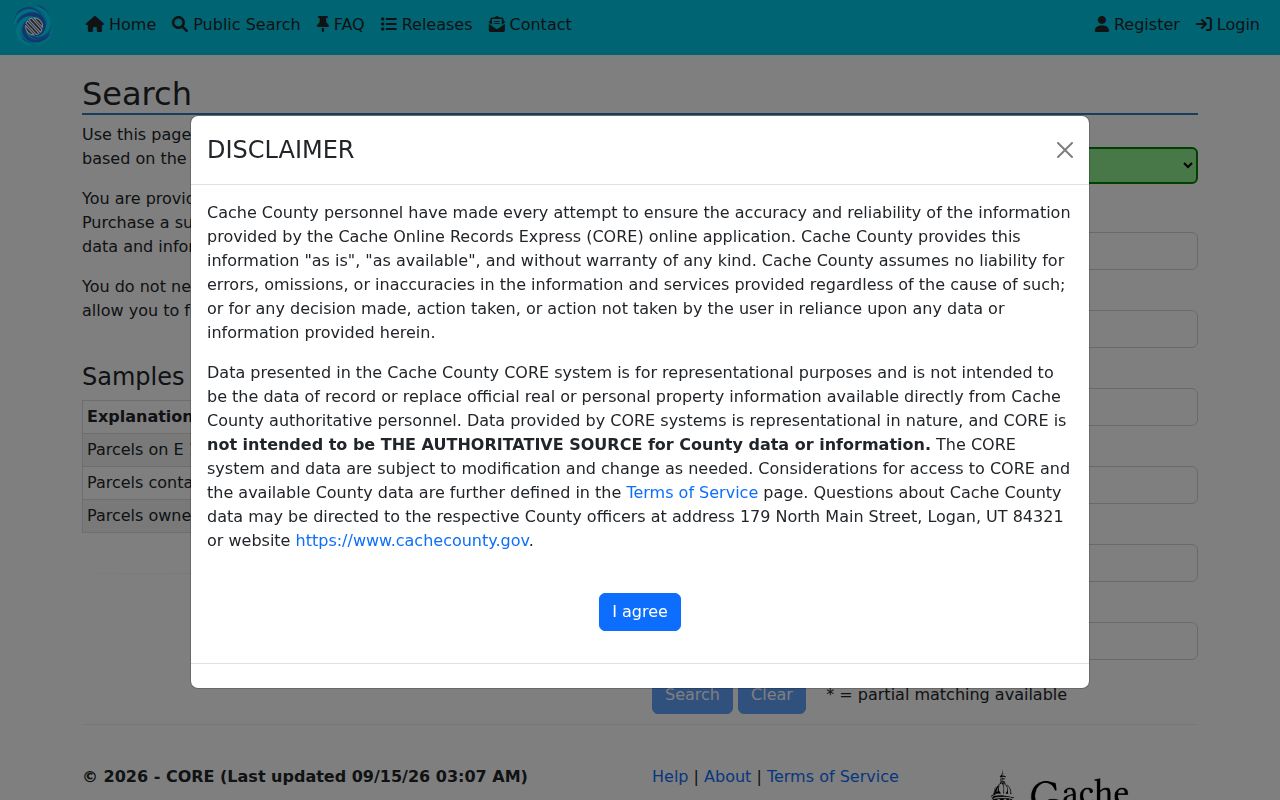
The field layout supports both person-name and entity-name searches without making them title conclusions.
Confirm the Cache County Deed
Once CORE gives you the parcel and owner name, move to the Recorder's index. Search the party names. Then check the parcel's legal description or tax ID so the instrument matches the same land. A deed names a grantor and a grantee. Mortgages, releases, easements, and liens also show up in a property's recorded history. These do not change who holds title.
The Recorder states that documents affecting title are indexed and open for public inspection. CORE subscriber access includes images and abstracts, and the Recorder provides copy services. An index entry alone is thin evidence. Request the document itself and read the transfer language. For a formal call on clear title, rely on a title company or attorney.
Business and Trust Owners in Cache
A parcel can belong to an LLC, corporation, trust, or estate rather than a person. CORE's business-name field and Property Watch's business or trust name field both accept those labels. The deed is still the source of truth. It names the grantee and describes the interest recorded. Guessing who controls an entity from a name alone is risky. No verified state business-search URL appears among the county's tools.
Probate can shift ownership too. A death may produce a personal representative deed. It may instead yield a beneficiary or survivorship instrument, an affidavit, or a transfer from heirs. Utah Courts Xchange can help locate public probate cases. Compare any court order against the instrument filed in Cache County. A case record and a deed are separate evidence, and both deserve a read.
Cache County Owner Records and Timing
Cache County publishes no measured lag between a closing and an assessor update. No fixed schedule exists for the tax roll either. So a fresh transfer may appear in the Recorder's deed records first. The Assessor's owner field can lag behind. Compare the date and parties on the newest recorded deed against the name in CORE. If the records disagree, ask the Assessor.
An old tax bill, map card, or mailing address never proves the named person still holds title. Note the record date and tax year with any result. For a full transfer history, work backward through the Recorder's grantor-grantee index. That is a separate task from a single owner lookup.
Cache County Property Watch Follow-Up
Property Watch sends a verified email alert. It goes out after the Recorder processes a document affecting a parcel. Sign-up asks for the tax ID. It also wants a first name and a last, business, or trust name. The alert tells a registered user that a new record exists. It does not reveal who occupies a property. Nor does it replace reading the recorded document itself.
Register with the parcel key when you can. When an alert arrives, follow it back to the Recorder's filing. The service is free and property-specific, built for forward-looking notice. Owner verification still comes from matching the parcel record with the latest instrument. See the official Cache County Property Watch form.
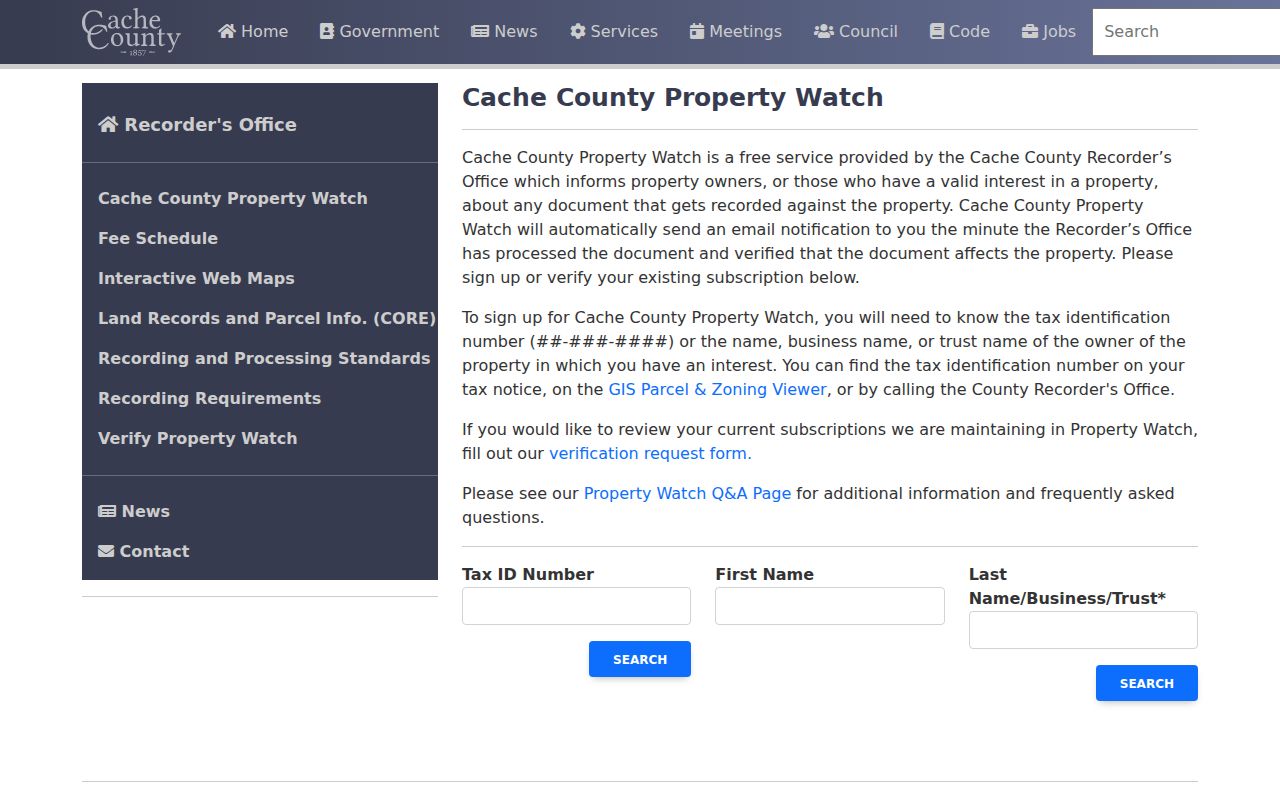
The form displays the parcel and owner-name keys a visitor uses to register for future recording alerts.
Where Cache County Shows an Owner
Several public tools in Cache County point to an owner. The assessor and CORE list the tax-roll owner. They also add parcel details. Recorder indexes name the parties on recorded instruments, and GIS places the parcel on a map with owner fields. Each source updates on its own schedule and carries different weight as evidence.
| Source | Owner Info It Gives | Access |
|---|---|---|
| CORE / Assessor | Tax-roll owner, parcel ID, mailing and property address | Public search; daily result limit |
| Recorder | Grantor and grantee named on a recorded instrument | Public inspection and copy channels |
| County GIS | Map location and selected-parcel fields | Public parcel viewer |
An owner field records the tax-roll or deed owner of record. That person may not live at the property. A mailing address can sit elsewhere. A trust or business may hold title. A Cache County owner search proves nothing about occupancy, relationships, or permission to make contact.
Limits of a Cache County Owner Search
A Cache County owner search has real limits. It rarely names everyone tied to a parcel. It cannot confirm who lives there or guarantee clean title. Expect a name, tax ID, and mailing address at most. Privacy rules in Utah can hold back more. GRAMA, the state records law, classifies files as private, controlled, or protected. Finding a public name in property records grants no right to publish sensitive details. It also grants no right to contact someone in a harmful way.
Lawful use. Use owner information for property research, purchase diligence, or a valid civic purpose. Do not use it to stalk, threaten, harass, or harm anyone.